
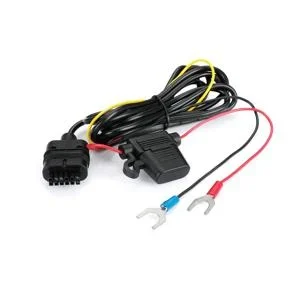
Molded cable and terminal ends
A representative LDZY configuration combines a molded connector body with separate wire leads and terminal ends. Review the connector interface, the length of each lead and the required terminal ends together.
In-house cable overmolding
LDZY manufactures complete custom overmolded cable assemblies with in-house mold design and cable overmolding. Every assembly is electrically tested for continuity, short circuits and wiring errors, with periodic visual and terminal-retention inspections during production.
Share your drawing, sample or connection requirements to discuss the cable construction, molded shape and production requirements.
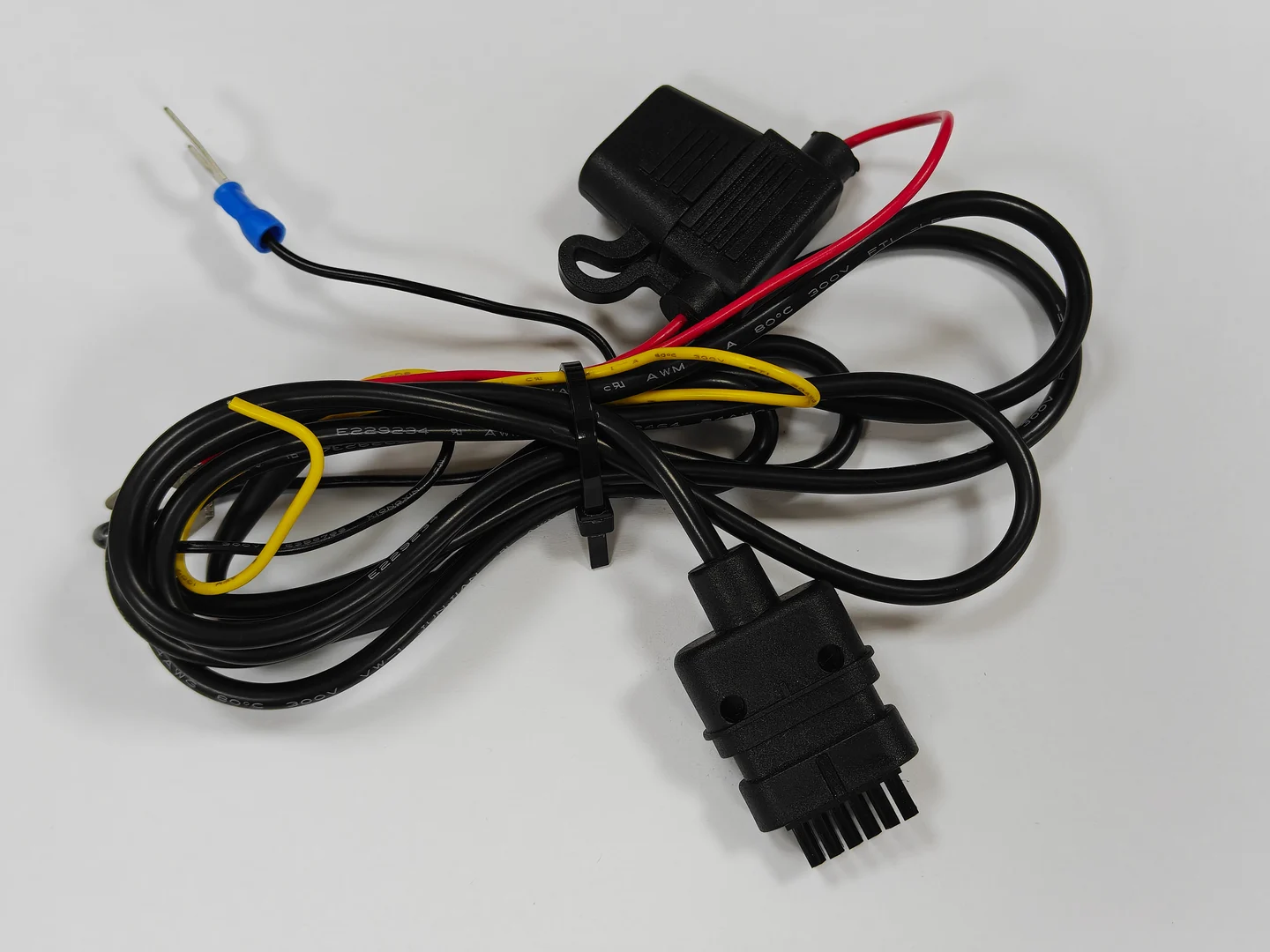
Custom overmolding brings the cable termination, molded body and cable exit together in a construction defined for your application.
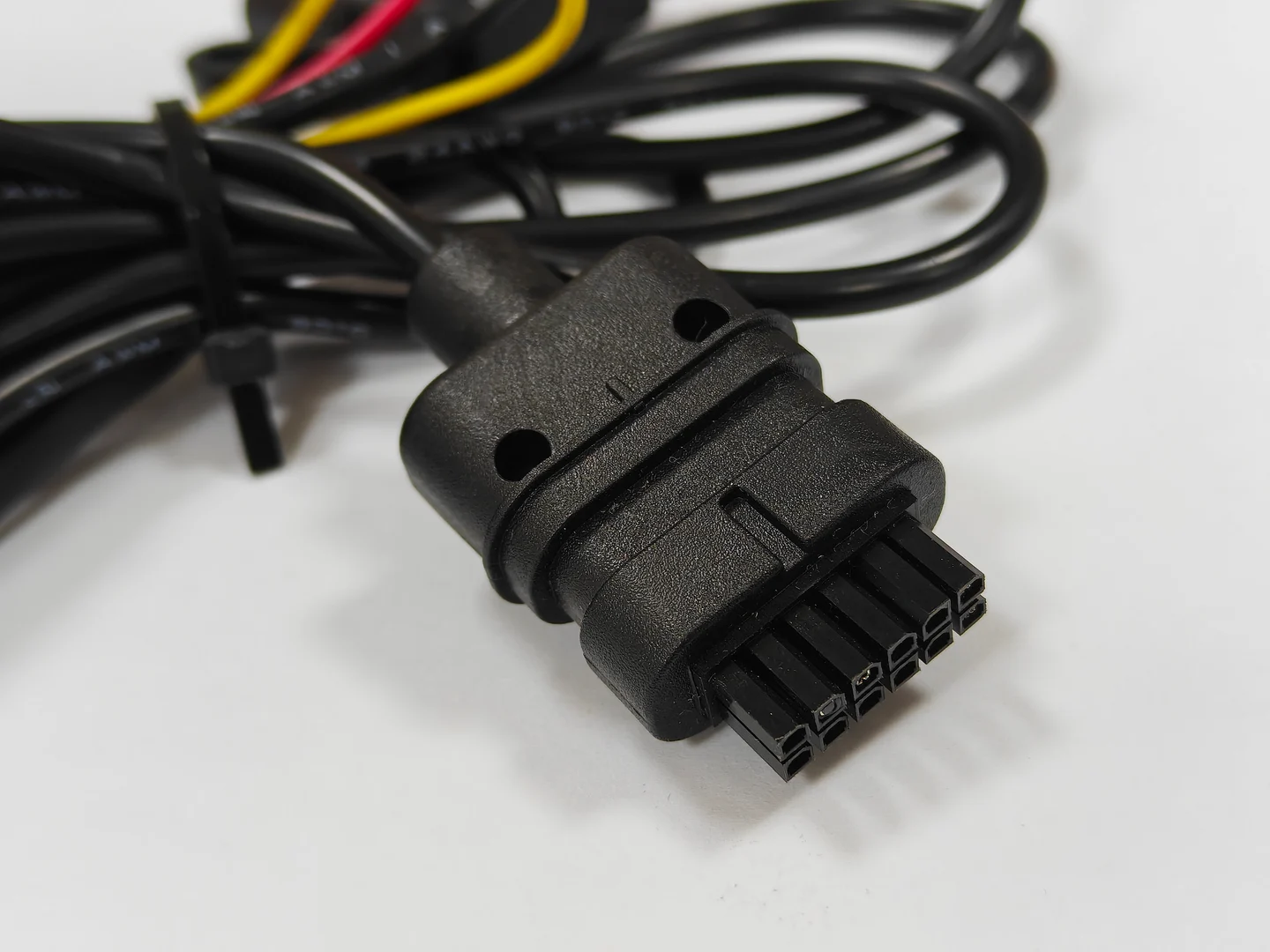
Representative product
This assembly brings a molded connection and separate wire leads into one cable layout. The close-up shows the molded body, connector interface and cable entry.
For your configuration, define the connector interface, molded envelope, cable length and the required treatment of each wire end. The photograph illustrates the construction; your order specifications are confirmed separately.
A representative LDZY configuration combines a molded connector body with separate wire leads and terminal ends. Review the connector interface, the length of each lead and the required terminal ends together.
A molded plug body with integrated cable-entry strain relief. Define the required interface, cable construction, overall length and available installation space.
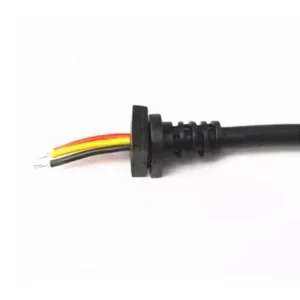
A molded cable-entry section for an enclosure or equipment opening. Provide the opening dimensions, mounting arrangement and required cable exit direction.
The examples illustrate assembly configurations. The specifications for your order are confirmed separately.
Materials & construction
Our commonly used molding materials include PVC, TPE, TPU and silicone. The material for your assembly is confirmed against the required construction and application.
Include the cable jacket, desired flexibility, handling conditions and any temperature or sealing requirements. These inputs help define the material and molded geometry to be reviewed.
Tell us if your drawing already specifies a material. A material name alone does not establish the finished assembly’s performance rating.
Review the connection ends, cable layout and molded features as one finished product. The final configuration is confirmed for your project.
| Item | Configuration to review |
|---|---|
| Connections | Connector interfaces, terminal types and wiring arrangement |
| Cable construction | Conductor requirements, cable size, shielding and jacket requirements |
| Dimensions | Overall length, branch or lead lengths, and measurement reference points |
| Molded body | Shape, space constraints, cable exit direction and handling requirements |
| Material and appearance | Required material properties, color, surface finish and markings |
| Operating conditions | Movement, temperature, moisture exposure and other application requirements |
| Acceptance requirements | Electrical checks, appearance criteria and any project-specific validation |
If some details are undecided, identify them in your inquiry so they can be reviewed before the specification is finalized.
From requirements to production
Start with your 3D drawing or sample, or ask us to develop the design from your requirements.
Send your 3D drawing, physical sample or requirements. We quote the project and explain the production MOQ before you commit to tooling.
After you approve the quotation, the tooling fee is normally paid before preparation of the 3D drawing.
We work from your 3D drawing or physical sample where available. If neither is available, we develop the design from your requirements. The 3D design is submitted for your confirmation before sampling.
Samples are made after design approval for your review and confirmation. Once the tooling fee has been paid, there is no minimum sample quantity requirement.
After approving the samples, you place the production order. We manufacture the assemblies to the confirmed requirements.
The tooling fee is normally paid before 3D drawing preparation. Sample quantity has no minimum requirement after tooling payment; the production MOQ remains the quantity stated in your quotation.
Manufacturing & quality
LDZY designs molds in-house and performs cable overmolding in our own factory.
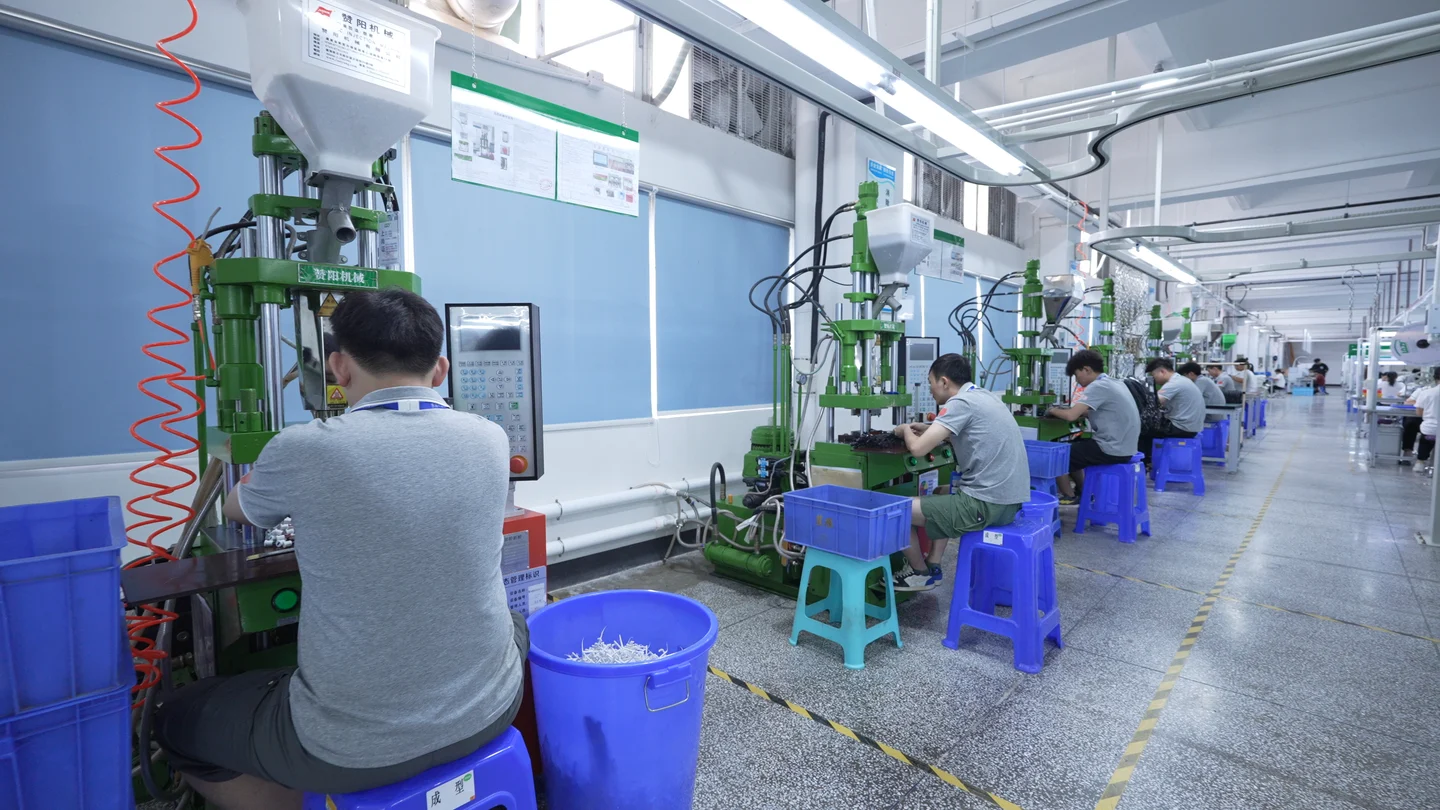
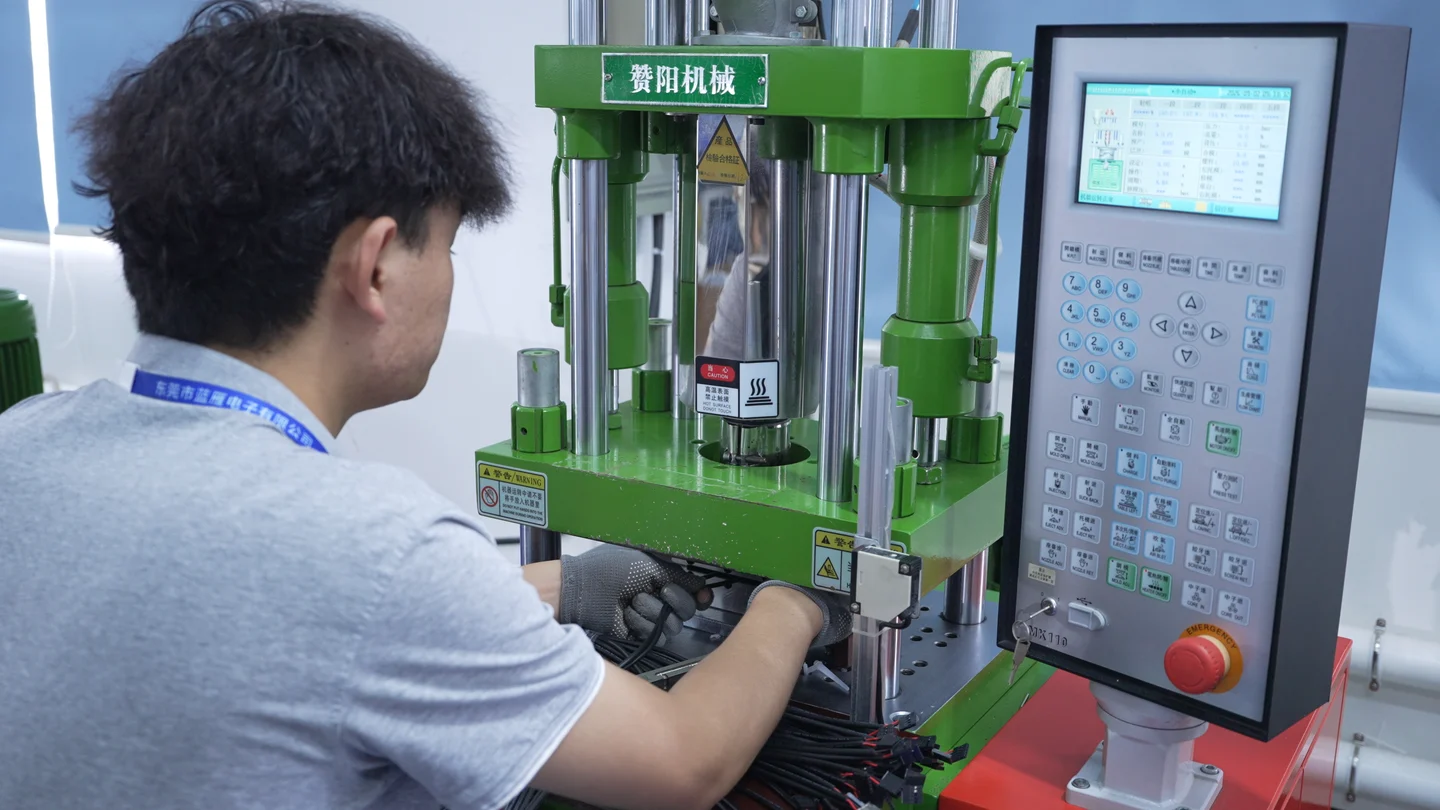
Mold design starts with the connector and cable geometry, the required external shape and the space available in the finished installation. Cable exit direction, strain-relief geometry and dimensional requirements should be defined together.
Include any existing drawing or sample with your inquiry. Tooling requirements and the details requiring confirmation can then be reviewed for the proposed assembly.
Drawing and sample review
Include the surrounding enclosure or mating-part outline where available. Mark the insertion direction, latch access, cable exit and surfaces that must remain clear. Review these interfaces before design approval so the molded body can be checked in its intended installation.
Identify visible faces, required markings and areas where surface appearance matters. Provide your acceptance criteria or an approved reference for review. Record appearance requirements separately from electrical requirements when confirming the sample.
Supply scope: We provide complete custom overmolded cable assemblies. We do not offer overmolding-only processing of customer-supplied cables or assembled harnesses.
Commonly used materials include PVC, TPE, TPU and silicone. The material for your assembly is reviewed and confirmed against its construction and application requirements.
The tooling fee is normally paid after quotation approval and before preparation of the 3D drawing. The production MOQ is explained in the quotation, before tooling payment.
After the tooling fee has been paid, there is no minimum sample quantity requirement. The production MOQ is specified in the quotation for your project. Sample quantity and production MOQ are separate terms.
We can work from a physical sample. If neither a 3D drawing nor a sample is available, we develop the design from your requirements. You confirm the 3D design before samples are made.
Our offering is complete custom overmolded cable assemblies. The cable construction, connections and molded features are reviewed together as one finished assembly.
Yes. Cable overmolding is performed in our factory, and mold design is handled in-house.
You can include a sample, photographs or a project description with your inquiry. Identify the features you need to retain and anything you want to change. The information needed to finalize the specification can then be reviewed.
No. A waterproof or ingress-protection requirement must be specified and evaluated for the complete assembly. Overmolding alone is not evidence that a particular rating has been achieved.
The connector and cable construction, molded geometry, material requirements, quantity and inspection scope all need to be considered. Include your target quantity and schedule so these can be addressed in the quotation.
To start, send the project information you have. Identify any details that are still open for discussion.